What is A CAC Status Report?
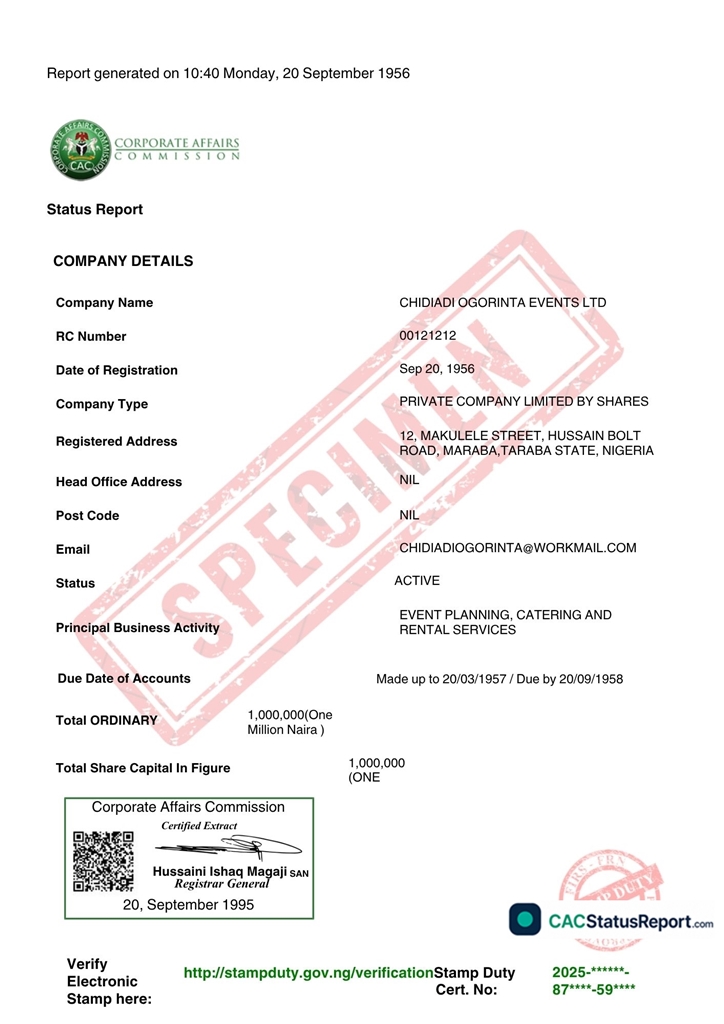
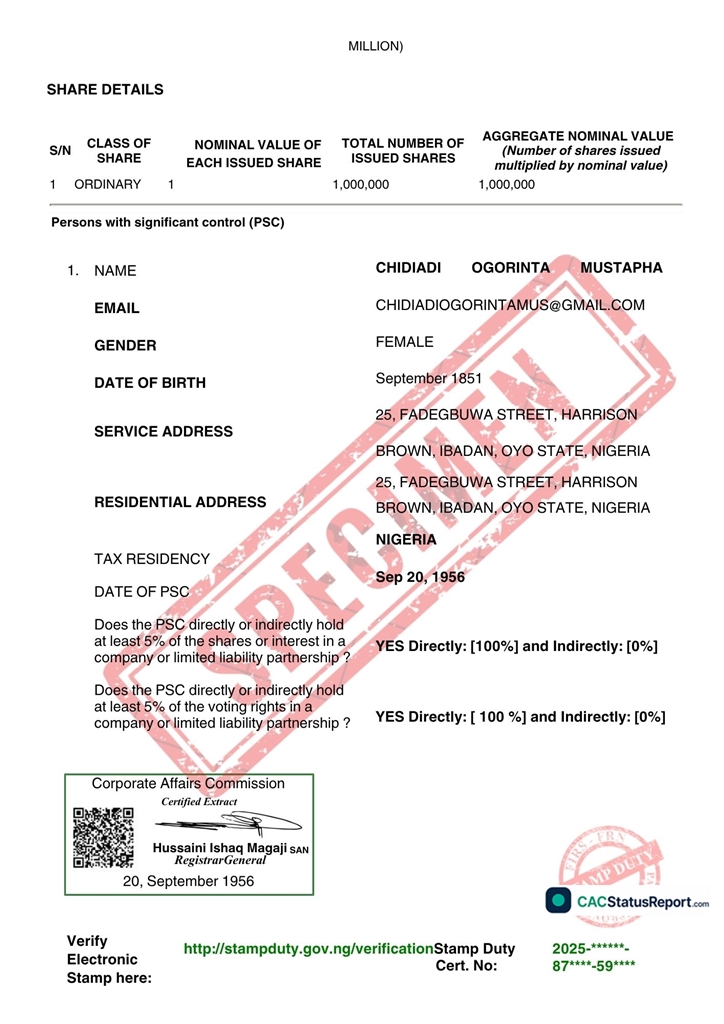
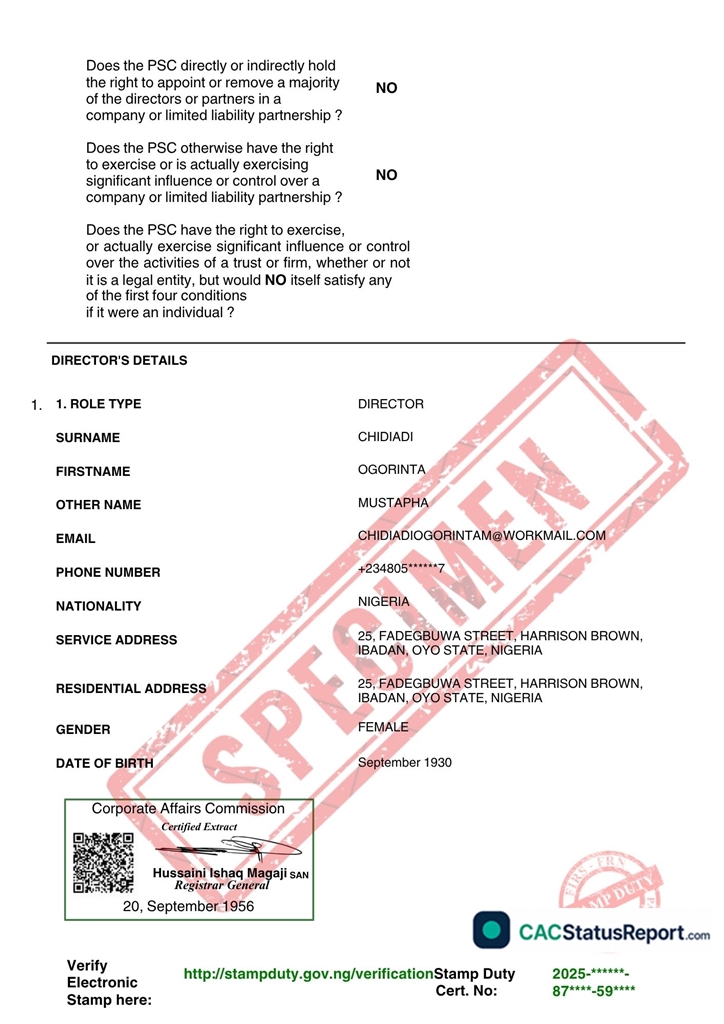
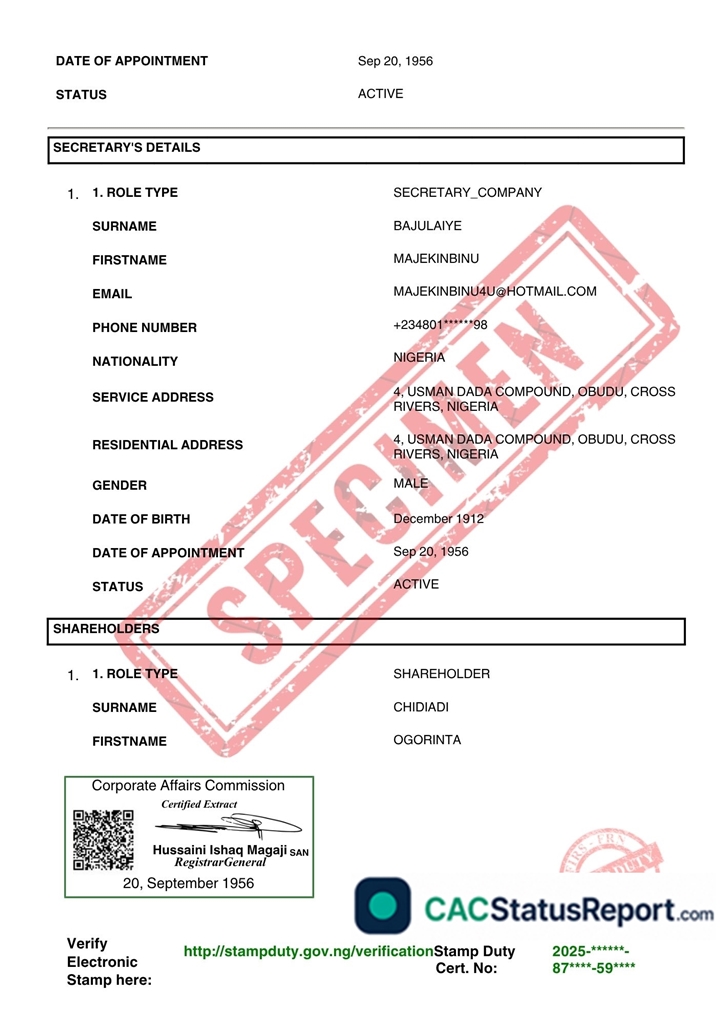
A corporate affairs commission (CAC) status report is a PDF document that shows the current legal standing and administrative profile of an entity registered in Nigeria. This document contains information such as; the proprietors of a business, their contact details, how much of the business each shareholder owns or holds in equity, when the business was registered, whether the business is still active with the corporate affairs commission, and a verified list of the company’s current directors and registered office address.
The CAC status report is like a digital ID card for businesses or NGO’s.
Why is This Document So Important?
Well, it’s the only document that provides a real-time, verified snapshot of the current ownership and compliance status of an entity (business name, company or NGO).
A CAC certificate basically shows that an entity is duly registered, the registration number, the date of registration and the Tax ID, while the Memorandum and Articles of association shows what business the company is allowed to carry on, how directors are appointed or removed, voting rights, share transfers, etc.
While both the CAC certificate and MEMART are important documents as well, none captures the entity’s current, up-to-date standing like the status report. That’s because a certificate and MEMART are static, they reflect a single moment in time, usually when the company was first registered, and they don’t change even if the ownership structure, directors, or compliance status changes years later.
A status report, on the other hand, is dynamic. It pulls directly from the CAC’s live database and tells you, as of today, who the current directors and shareholders are, whether the company’s annual returns are up to date, whether it’s active, dormant, or has been struck off the register, and whether there are any pending changes or discrepancies in its filing history.
A status report shows changes that have been made on the company over time. For example, if a director updated their address or date of birth, it appears on the CAC status report.
In a business environment where directorship changes, share transfers, and company statuses can shift without public notice, that distinction matters a great deal, especially before entering into any transaction, partnership, or investment with an entity.
When is a CAC Status Report Required?
There are many reasons a private organization, government parastatals or even private individuals may require a CAC status report. While we may not be able to cover every single reason in this article, here are some of the most common scenarios where a status report becomes essential:
Banking
Banks and other financial institutions often request a CAC status report before opening a corporate account, approving a loan facility, or processing a large transaction. It helps them confirm that the company is legitimately registered, currently active, and that the individuals presenting themselves as directors or signatories are indeed authorized to act on the company’s behalf.
Legal
Lawyers rely on status reports during due diligence for mergers, acquisitions, litigation, and contract negotiations. It helps confirm the true ownership structure of a company, verify that it’s in good standing, and uncover any red flags, such as pending liquidation, unresolved filing issues, or a mismatch between claimed and actual directors, before a legal transaction proceeds.
Grants
Grant-making bodies, whether government agencies or private foundations, typically require a status report to confirm that an applicant organization is properly registered, compliant with its statutory obligations, and not a shell entity. This protects the integrity of the grant disbursement process.
Real Estate
In property transactions involving corporate entities: whether it’s a company purchasing land, leasing office space, or entering a joint venture, a status report helps verify that the entity is authorized to transact and that the people signing on its behalf are genuinely its directors.
Private Investors
Before committing funds to a business, investors use status reports as part of their due diligence to confirm ownership structure, verify that the company is compliant with CAC regulations, and ensure there are no hidden discrepancies in shareholding or directorship that could affect their investment.
Immigration and Visa Authorities
For business visas, work permits, or expatriate quota applications, immigration authorities may request a status report to confirm that the sponsoring company is legitimately registered and actively operating, and that the individual applying is genuinely linked to that company.
NGOs & International Donors
International donors and partner organizations often require a status report to verify that an NGO is validly registered, compliant with its filing obligations, and governed by the trustees or directors it claims to have, an important safeguard against fraud and misrepresentation in the non-profit sector.
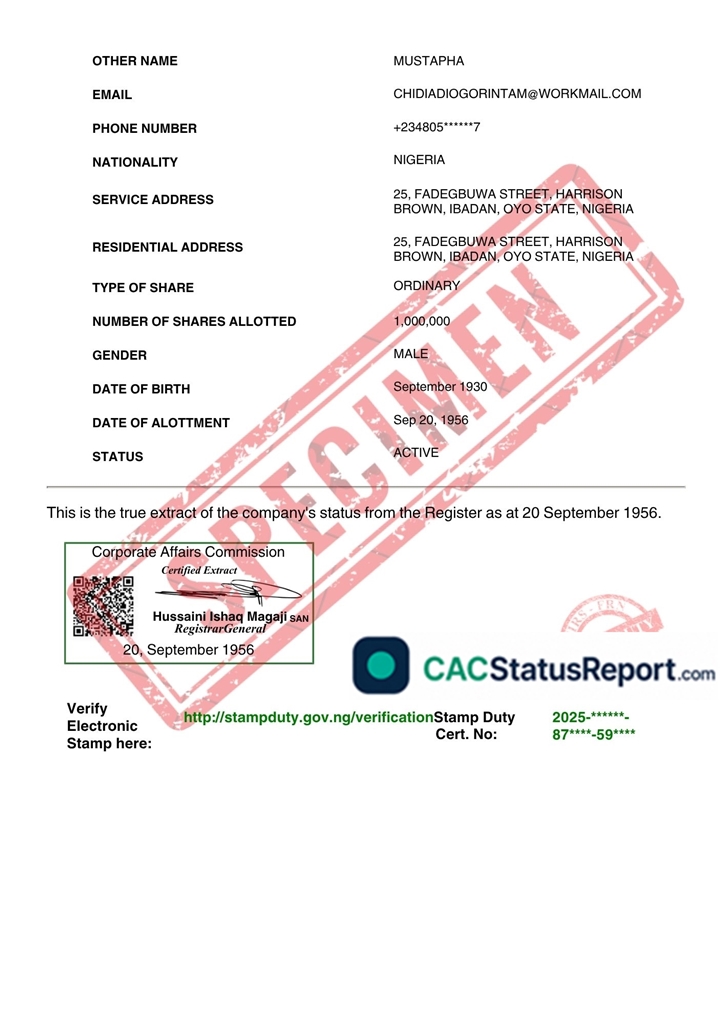
What Does a CAC Status Report Look Like (Samples)?
Only an image can do justice to what a corporate affairs commission status report looks like, so we have provided images to samples. Please note that some information is altered or blurred to protect the privacy of its owners.
Other Names for a CAC Status Report
- CAC Search Report
- E-status report
- Company extract
- Company Status Report
- CAC/BN/1 (for business names)
- Entity Status Report
Now that you know what a CAC status report is, check our article on how to get a status report for any entity registered in Nigeria.